
Create Campaign Assets Using AI (Without Full Crew)
Estimated reading time: 10 minutes
Key Takeaways
- PUNX’s 5-phase framework allows lean teams to produce high-volume content using AI.
- This approach was successfully used to create 300+ video assets for GCash in under three weeks.
- The framework includes Intelligence & Discovery, Creative Strategy, AI-Assisted Production, Deployment/Optimization, and Measurement Loop.
- AI enables the automation of repetitive tasks, reducing production time and cost.
- Human oversight is essential for maintaining brand integrity and quality control.
Table of contents
- Create Campaign Assets Using AI (Without Full Crew)
- How Does an AI Creative Agency Operating Model Work?
- Phase 1: Strategic Intelligence (Without the Research Crew)
- Phase 2: High-Speed Copy and Visual Asset Generation
- Phase 3: Video Production Without the Production Crew
- Phase 4: Personalization and Scaling (The Multiplier Effect)
- Phase 5: The Human Override (Hybrid Quality Control)
- Build vs. Buy: When to DIY vs. Hire an AI Creative Agency
- Measuring Success: ROI for the Lean Crew
- Frequently Asked Questions
PUNX is a global-facing AI creative agency based in the Philippines for brands anywhere in the world. This post covers how to create campaign assets using AI without a full crew. It is written for lean marketing teams who need high-volume output with limited headcount. PUNX used this exact framework to deliver 300+ video assets for GCash in under three weeks, cutting production time by 60%.
This guide will show you How to Create Campaign Assets Using AI (Without a Full Crew) by adopting the same workflows used by a modern AI creative agency, but adapted for in-house lean teams. Marketing teams now face pressure to produce video, static, and copy assets at high volume while budgets and headcount shrink. FunctionFox defines an AI creative agency as one that builds strategy, production, and measurement around AI and automation, making these methodologies accessible to small teams.
How Does an AI Creative Agency Operating Model Work?
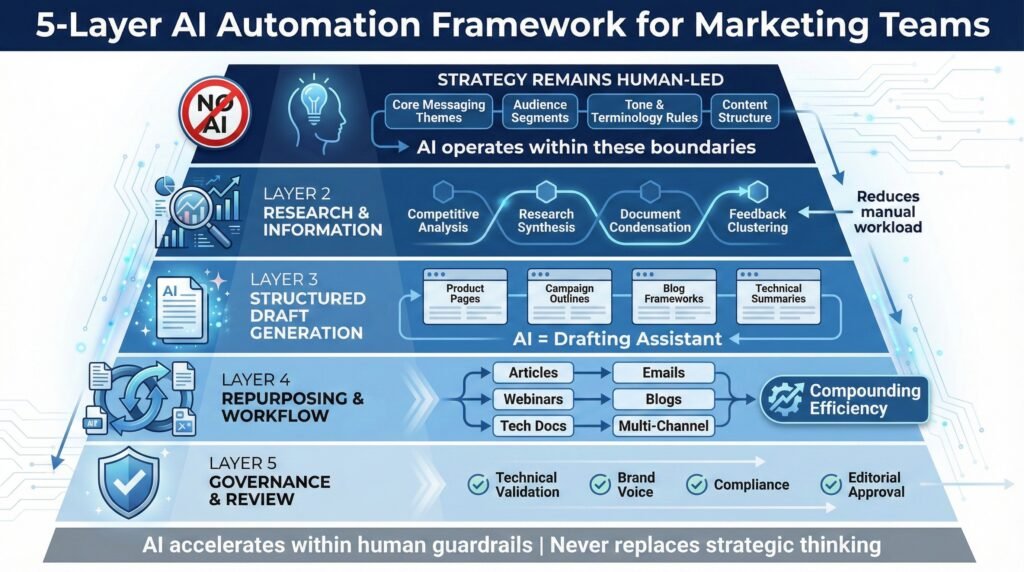
To create assets without a crew, you need a framework, not just tools. Top AI marketing agencies use a five-step operating model: Intelligence & Discovery, Creative Strategy, AI-Assisted Production, Deployment/Optimization, and Measurement Loop. Unlike traditional shops, these agencies use AI as the core operating model, not a side tool.
KeenFolks calls this “AI Growth Systems,” connecting intelligence, platforms, workflows, and experiences into measurable outcomes. Darkroom Agency notes that this approach uses automation for faster, more efficient work across the entire production pipeline. This systematic approach allows small teams to replicate agency-level output without maintaining large departments.
Phase 1: Strategic Intelligence (Without the Research Crew)
Traditional market research requires dedicated teams. AI replaces this function through AI for CMOs strategic implementation tactics. Use AI content creation tools for marketers to cluster audiences by behavior, analyze competitor content gaps, and predict messaging resonance before production begins.
Specific prompts you can use today:
- “Analyze these 500 customer reviews to identify the top three emotional triggers for our target demographic.”
- “Compare our top five competitors’ social content from the last quarter and highlight missing themes in our current strategy.”
- “Generate a data-driven creative brief based on this audience sentiment analysis.”
FunctionFox notes that AI agencies feed audience insights and behavior data directly into creative decisions, eliminating weeks of manual research. This intelligence phase ensures every asset you produce has a defined purpose and target before a single pixel is rendered.
Phase 2: High-Speed Copy and Visual Asset Generation
Copy at Scale
Generative AI for creative agencies allows lean teams to produce 20+ headline variations, body copy options, and email sequences in minutes instead of days. Apply this to your workflow by generating multiple copy variants for A/B testing simultaneously. Feed your brand guidelines into the AI and request variations that match specific tones for different customer segments.
Visual Design Without Designers
AI design automation at scale handles image generation, background removal, automatic resizing for platforms, and layout suggestions. Create one master design, then use AI to generate square, vertical, and banner formats automatically. This approach delivers high volume creative asset generation without requiring dedicated designers for every resize or adaptation.
Superside confirms that AI-assisted design and copy workflows handle repetitive tasks and variations efficiently. FunctionFox adds that this automation reduces the manual labor traditionally required for asset versioning across channels.
Phase 3: Video Production Without the Production Crew
This phase addresses the core challenge: eliminating the traditional video crew while maintaining quality.
Script to Screen: Use text to video AI marketing tools to convert written scripts into rough-cut videos immediately. Input your script, select visual styles, and generate base footage for review within hours, not weeks.
Editing Automation: For teams needing external support, AI video editing services Makati (such as those offered by PUNX) provide automated cutting, captioning, and b-roll insertion. This service acts as an extension of your team, handling technical post-production without requiring full-time editors on payroll.
Volume Creation: Deploy an AI video maker for high volume content to produce AI generated video ads for brands and social content. Generate 50 variations of a TikTok or Reel from a single concept, each with different hooks or calls-to-action. For broadcast-quality work requiring specialized execution, partner with an AI video content creation agency or AI video production services Philippines providers to maintain lean in-house teams while accessing technical expertise.
FunctionFox identifies AI-supported video production and editing capabilities as core services that eliminate traditional crew dependencies.
Phase 4: Personalization and Scaling (The Multiplier Effect)
Moving from one asset to one hundred requires systematic scaling. AI content at scale for global brands enables AI video personalization for campaigns by dynamically adjusting thumbnails, ad copy for specific segments, and email headers based on viewer data.
Localization: Automatically adapt assets for different markets without hiring local crews. AI translates on-screen text, adjusts cultural references in visuals, and resizes formats for regional platform preferences.
Workflow Automation: Set up pipelines where one brief generates assets across all channels. When PUNX applied this multiplier effect for Globe, the team generated 150 localized social assets from a single master campaign concept. This AI workflow automation creative teams approach drove a 35% increase in regional engagement compared to generic national campaigns.
YouTube research on scaling content production confirms that modular content frameworks combined with AI tools allow small teams to manage enterprise-level volume. FunctionFox emphasizes that dynamic personalization at scale across audiences becomes possible only through these automated systems.
Phase 5: The Human Override (Hybrid Quality Control)
AI handles drafts; humans handle decisions. The hybrid AI human creative teams model requires clear governance. AI generates variations and handles technical production, while your team controls brand strategy, storytelling nuance, and final approval.
Human Review Checklist:
- Brand voice consistency across all AI-generated copy
- Visual identity alignment in generated images and video
- Legal compliance and rights clearance for AI-sourced elements
- Emotional resonance and cultural sensitivity review
Superside notes that humans must retain control of brand strategy and art direction. Darkroom Agency emphasizes that governance, data privacy, and brand safety policies are mandatory components of AI governance for creative departments, ensuring AI augments rather than dilutes brand standards.
Build vs. Buy: When to DIY vs. Hire an AI Creative Agency
Marketing leaders face a clear decision framework. Build internal AI workflows if you have recurring, high-volume needs and dedicated operations staff. Hire specialists for complex execution requiring specific technical expertise, such as AI animation studio Philippines Makati work or advanced AI product video production company deliverables.
When P&G needed specialized 3D product visualization for a regional shampoo launch, the brand partnered with PUNX rather than building internal capacity. This decision reduced time-to-market by four weeks and eliminated the need to hire three additional full-time specialists. Compare costs carefully: internal AI stack licensing, training, and management versus AI creative agency pricing and ROI from specialized partners.
FunctionFox notes that operational efficiency and cost reduction remain primary benefits of working with established AI agencies rather than attempting full internal builds.
Measuring Success: ROI for the Lean Crew
Track four specific KPIs to validate your measuring AI creative ROI efforts:
- Speed to Market: Measure time from brief to publish. Target a 50-60% reduction in production cycles.
- Cost Per Asset: Calculate total production cost divided by output volume. Effective AI implementation typically reduces this by 40-60%.
- Volume Output: Track assets produced per week. Lean teams should achieve 3-5x output increases without headcount growth.
- Performance Lift: Monitor engagement rates and ROAS from personalized content versus generic assets.
KeenFolks documents higher ROI through better targeting and personalization, while Darkroom Agency records consistent performance improvements across campaigns using these methodologies. These metrics prove speed to market creative strategies directly correlate with revenue impact.
Conclusion: Your No-Crew Creative Future
Mastering How to Create Campaign Assets Using AI (Without a Full Crew) requires adopting the AI creative agency mindset: systematic, data-driven, and hybrid human-AI. Start with one campaign pilot using the five-phase framework outlined above. As these asset workflows mature, they will integrate into future of events AI technology trends, where real-time content generation meets experiential marketing. The CMO’s role shifts from managing production overhead to directing intelligent creative systems that scale.
Frequently Asked Questions
How to create campaign assets using AI without hiring more staff?
Use a five-phase framework: intelligence gathering, strategy, AI-assisted production, deployment, and measurement. Feed AI tools specific prompts for audience analysis and brief generation, then use automation for resizing and versioning. PUNX applied this for GCash, producing 300+ videos with zero additional hires.
What is an AI creative agency and how does it differ from traditional agencies?
An AI creative agency builds strategy, production, and measurement around AI as a core operating model, not just a side tool. Traditional agencies rely on manual processes and human insight alone; AI agencies combine predictive analytics with human strategy to produce work faster and at higher volume.
Can AI really replace video production crews?
AI replaces crew-dependent tasks like rough cutting, captioning, and format resizing, but not creative direction. Text-to-video tools generate base footage from scripts, while AI editing services handle post-production technical work. Human directors still control storytelling and brand alignment.