
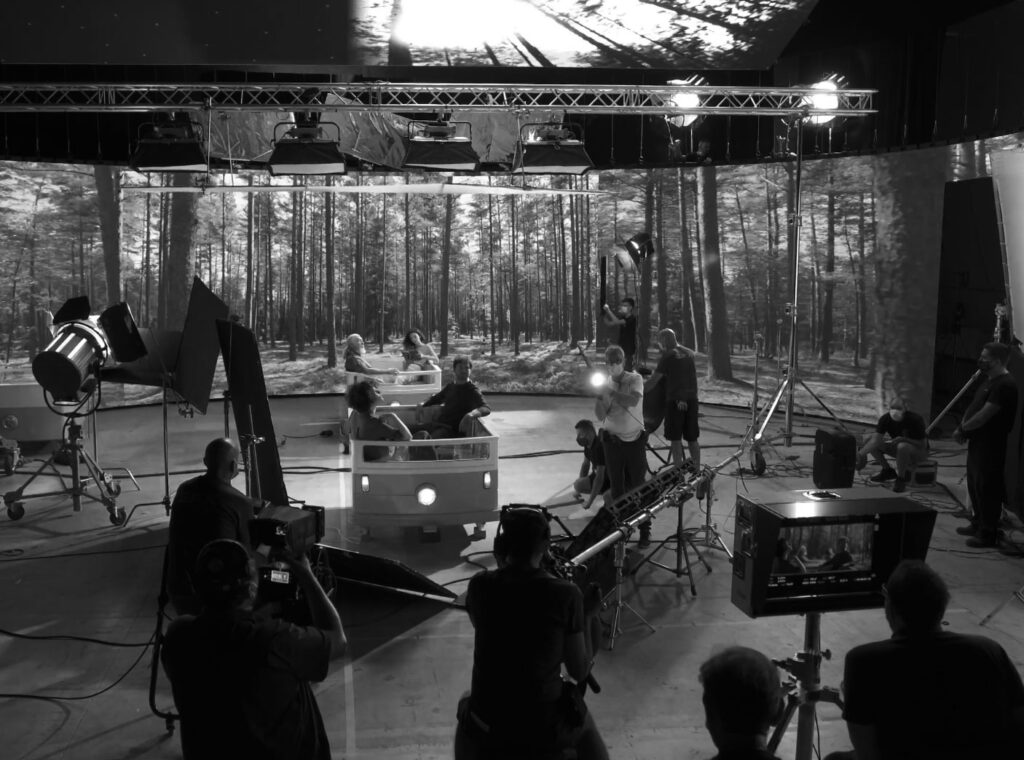
Behind the Scenes of an AI-Powered Film Studio: Your Exclusive Tour
Estimated reading time: 10 minutes
Key Takeaways
- AI Filming Agencies blend human creativity with autonomous AI agents for faster content creation.
- Multi-agent systems transform traditional production workflows, enabling rapid content delivery.
- AI video production includes phases of pre-production, automated production, and AI-powered post-production.
- The Philippines is emerging as a hub for AI-driven creative content, offering cost-effective, high-quality production.
- AI animation services automate many traditional animation tasks, leading to seamless integration with live-action footage.
Table of contents
- Behind the Scenes of an AI-Powered Film Studio: Your Exclusive Tour
- How an AI Filming Agency Works: The Anatomy of an AI-Powered Film Studio
- Inside AI Video Production: The 3-Step Pipeline
- AI Animation Services: The Digital Animation Suite
- The Control Room: AI Agents and Quality Assurance
- From Concept to Delivery: A 5-Day Campaign Showcase
- Global Operations: The Philippines Creative Hub Advantage
- Commercial Applications: Enterprise AI Video Solutions
- Why This Works: The Human-AI Collaboration Model
**Behind the Scenes of an AI-Powered Film Studio** reveals a new world where movies, ads, and brand stories come to life faster than ever before. This is not science fiction. This is the modern AI Filming Agency—a smart mix of human creative directors and autonomous AI agents.
What is an AI agent? It is goal-oriented computer software that plans, builds, and improves marketing content without human hands touching every step. These agents create AI video production assets, AI animation services, and interactive media at speeds traditional studios cannot match.
Old-school film studios need large crews, heavy equipment, and months of manual work. New AI-powered studios use agentic AI to handle routine tasks automatically. Humans focus on big ideas, story direction, and final quality checks. The result? Broadcast-ready content in days, not weeks.
Welcome to the full tour. You will see the technology, the workflows, and the human-AI teamwork that defines modern creative production.
How an AI Filming Agency Works: The Anatomy of an AI-Powered Film Studio
Traditional production houses run like assembly lines. They move step-by-step: script, storyboard, film, edit, deliver. Each step needs people. Each person adds time and cost.
An AI Filming Agency works differently. It uses multi-agent systems where software agents handle many jobs at the same time.
The Four Core Agent Types:
- Planner Agents draft creative plans and storyboards from brand briefs
- Producer Agents generate AI video production and animation variants at high speed
- Reviewer Agents check for brand compliance, safety, and legal requirements
- Optimizer Agents study performance data and improve future content based on results
Traditional agencies often need weeks to deliver one concept. AI studios produce dozens of concepts rapidly. Human teams shift from manual execution to “vision and taste”—approving the best work and adding emotional depth.
The market confirms this shift. The AI automation agency market is projected at $11 billion or more. This growth comes amid a $3 trillion service economy change. Brands now demand speed, scale, and smart automation.
Inside AI Video Production: The 3-Step Pipeline
AI video production happens in three clear phases. Each phase uses smart tools to cut time and cost while keeping broadcast quality.
Step 1: Pre-Production with Smart Tools
Planner agents read brand briefs instantly. They use tools like MidJourney for visual concepts and Relume.io for wireframing. These tools create shot lists, scripts, and style frames in hours, not days.
Step 2: Automated Production
Producer agents take over filming. They use programmatic templates, virtual production environments, and robotic process automation to capture footage. This reduces crew size while maintaining professional quality.
Step 3: AI-Powered Post-Production
AI editing services handle rough cuts, color grading, sound design, and platform formatting. The system creates square videos for Instagram, vertical clips for TikTok, and widescreen versions for YouTube automatically.
Behind the scenes, producer agents generate multiple creative directions at once. Human directors pick the best options and refine them. This “select and polish” method beats “create from scratch” every time.
Speed Comparison:
- Traditional timeline: 6-8 weeks
- AI studio timeline: Hours to days
- Cost impact: Scalable content creation without proportional budget increases
AI Animation Services: The Digital Animation Suite
AI animation services bring 2D and 3D characters to life without traditional hand-drawing every frame. These services include automated character animation, motion graphics, and visual effects that blend with live-action footage.
How AI Animation Works:
- Machine learning models handle in-betweening (tweening)—the process of drawing frames between key poses
- Automated rigging builds character skeletons instantly
- AI lip-syncing matches mouth movements to voice tracks automatically
Real Applications:
- AI-generated explainer videos for complex products
- 3D product demonstrations with animated features
- Branded motion graphics packages that keep visual identity consistent across hundreds of assets
- Virtual brand ambassadors and mascots for campaigns
Hybrid Workflows:
Producer agents composite animated elements into live-action footage automatically. This means AI video production and AI animation services work together seamlessly.
The Philippines is growing as a hub for this work. Studios there deliver animation quality that meets global enterprise standards while offering cost advantages.
The Control Room: AI Agents and Quality Assurance
Every AI Filming Agency needs a control room. This is where intelligent systems manage quality and improvement.
Reviewer Agents:
These autonomous software systems scan all video and animation outputs before human eyes see them. They check for:
- Brand guideline compliance
- Legal requirements and safety standards
- Visual consistency across all assets
Optimizer Agents:
These systems analyze performance data from published content. They automatically adjust future AI video production by:
- Changing video pacing based on viewer drop-off points
- Moving call-to-action buttons for better clicks
- Testing thumbnail styles based on engagement metrics
The Human Touch:
Creative directors act as “taste curators.” They provide final approval and add the “human magic” that algorithms cannot replicate. This includes emotional storytelling nuances, cultural context, and brand soul.
Transparency Standards:
Reputable agencies disclose AI usage to clients. They maintain ethical standards in content creation, ensuring audiences know when AI assists in production.